
Best Winter Horse Care Hack for Acreage Owners
Last winter was ridiculously long and brutal here in Northern Alberta as over 8 feet of snow was recorded at the local university. Along with the snow, there were repeated, extensive, freeze and thaw cycles, and leaving the woodstove to do chores was often not for the faint of heart.
We were grateful that we had adapted the bale grazing, which we already had in previous years implemented for the cattle, to the horse herd. Although we still made daily welfare checks on foot (doubling this activity up with the much necessary daily dog walks, then quickly returning to the wood stove), this way of feeding made trips with the tractor and extended periods outside limited too almost obsolete.
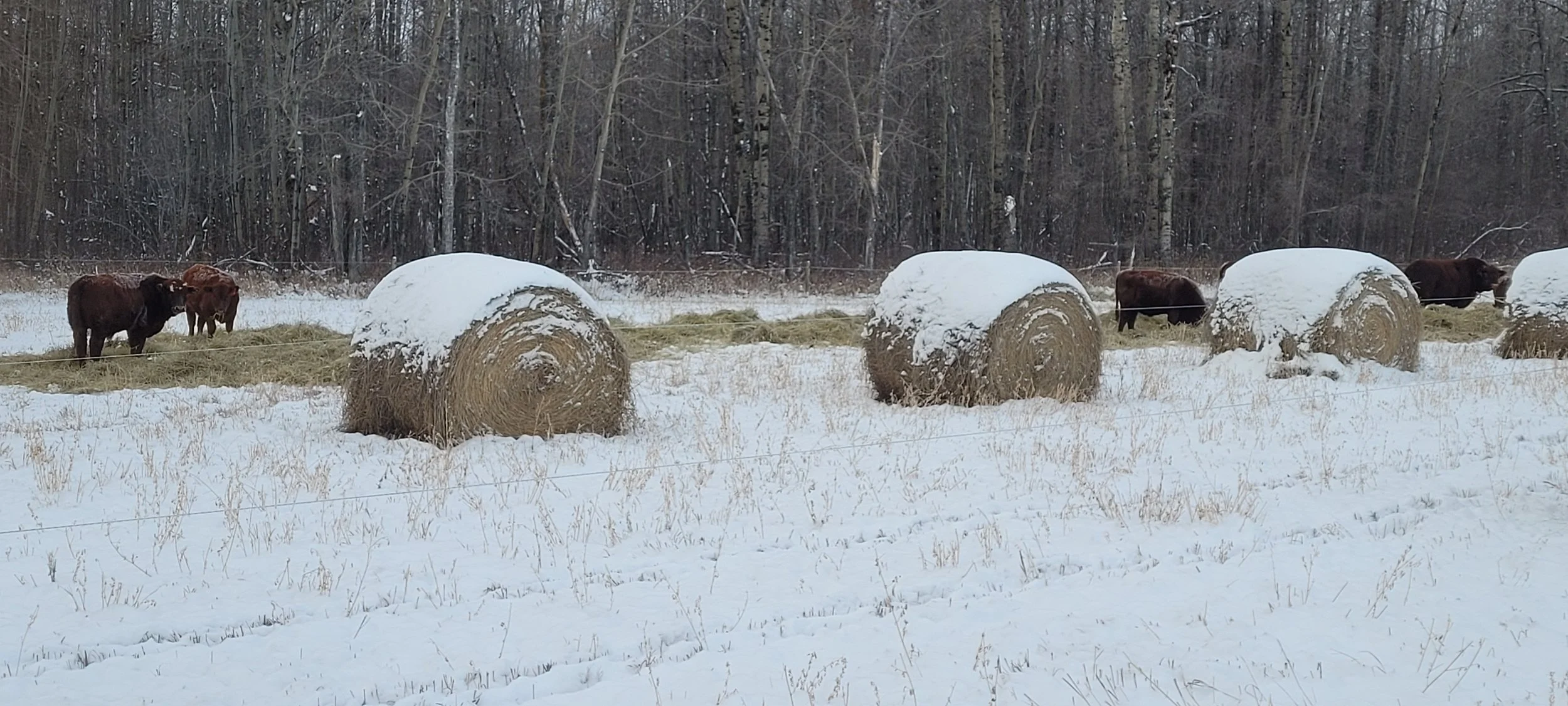
Cattle on winter bale graze set up after haying…..what do you think we are saving on diesel fuel and drudgury?
For the cattle, we tend to feed richer feeds such as hay higher in alfalfa to meet there unique dietary needs as ruminants, however this feeding method can be adjusted to a coarse, more mature, grass hay uniquely more suitable for the horses, so that they can be fed ad lib. Just as in feeding stabled horses small, square bales, care should always be taken to source high quality, dust free bales. The higher fiber helps to fill them up with increased volumes of lower calorie feeds, as this type of structural fiber is more difficult to digest. Remember that the horse is perfectly designed to thrive on this. The higher fibers in this material will be broken down by specialized gut microbes and will release an immense amount of fuel for things including energy and heat. Horses, unlike cattle or sheep evolved to eat this type of feed, thus bale grazing can be easily adapted to them. It must be noted that the horses should have free access to fresh water and a good quality loose mineral with salt, and should still be checked regularly and supplemented as needed. We always feed to our easiest keeper and supplement the others.
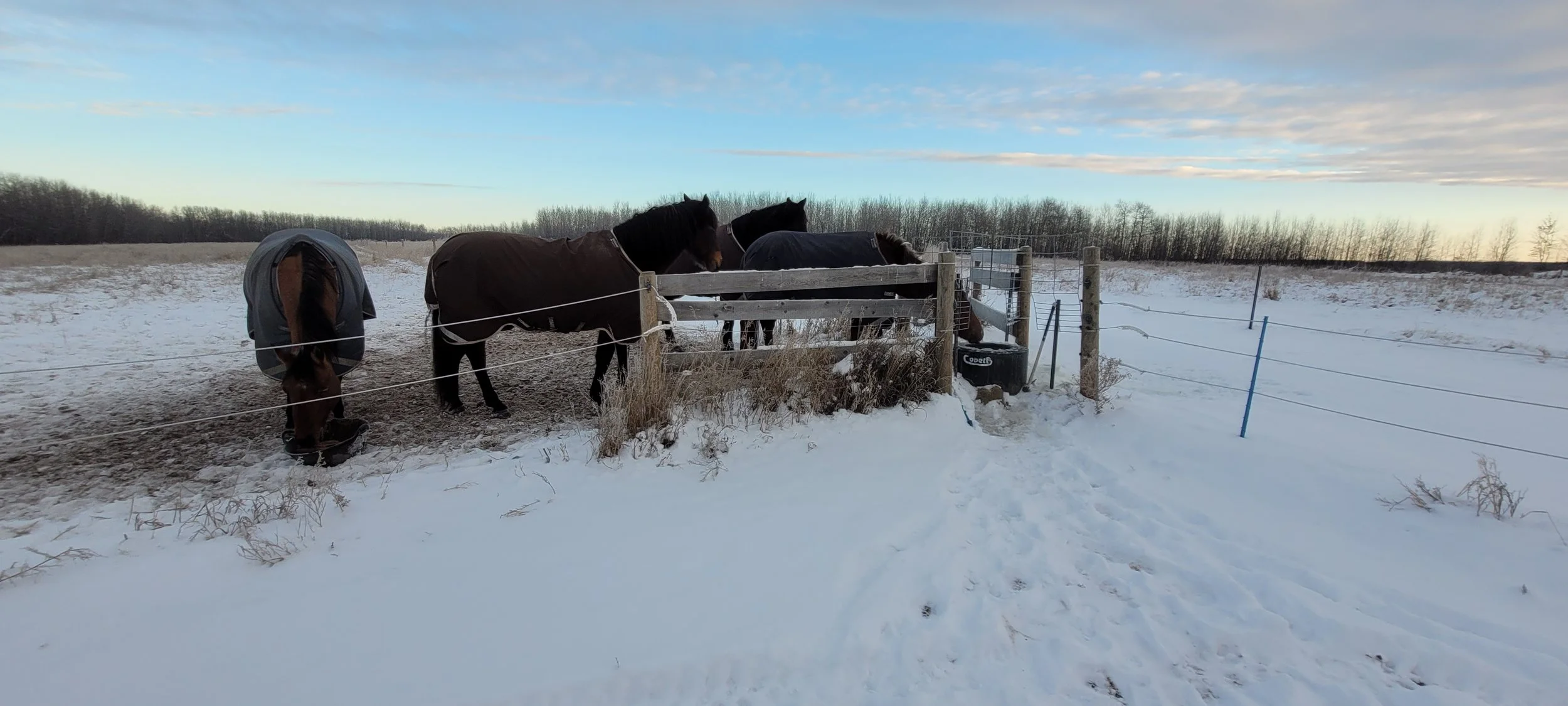
Ensure that horses have easy access to loose minerals, salt and water while winter bale grazing.
If done properly, bale grazing is a great way to not only reduce your chore time and wear and tear on your equipment with those inevitable freezing winter starts, it can also be useful to increase your soil bank and improve fertility for many seasons to come. It can however be a bit of a long game, but with proper practices and patience great results will be imminent.
By learning to, and by taking some time to read your pastures to see where they could use some help, you can start to address where to place bales throughout the winter. Do you have bare spots? Are there areas rife with weeds, indicating nutrient imbalances and compaction? Look at the tops of hummocks and high traffic areas. These are usually places that could use a little extra helping of soil building materials. This also, inadvertently becomes a great way to begin observing your land, getting to know the seasonal changes and adjusting ahead of complete degradation.
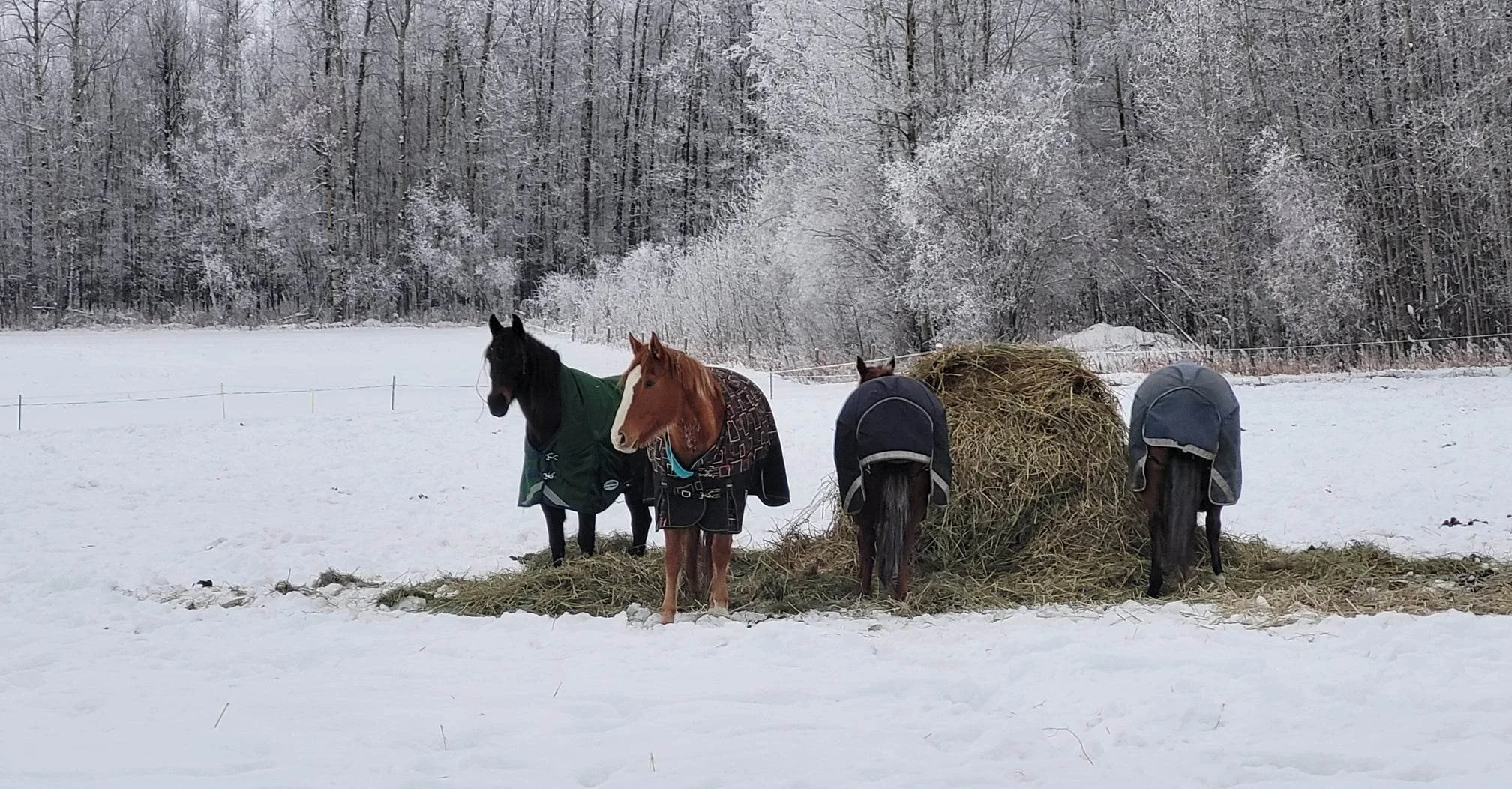
Horses helping to improve soil organics and function by grazing bales on pastures in winter.
If you choose to bale graze, large round bales are optimal. They can either be placed in grids or lines separated with electric fencing, where you can open to the next bale on foot when the time arises, or you can set them out one or two at a time throughout the winter after having done some ground truthing in the fall to look for the aforementioned best spots.
Hay is NEVER wasted if fed in this way, as the decomposing plant matter left behind, trampled with a cocktail of dung and urine will degrade with the help of soil microbes and over time turn into a highly valuable black soil mat, that will be able to capture and hold more rain water throughout the season and bless you with a bounty of extra forage on previously tired and depleted pastures.