
Some Perspective on Spring Laminitis
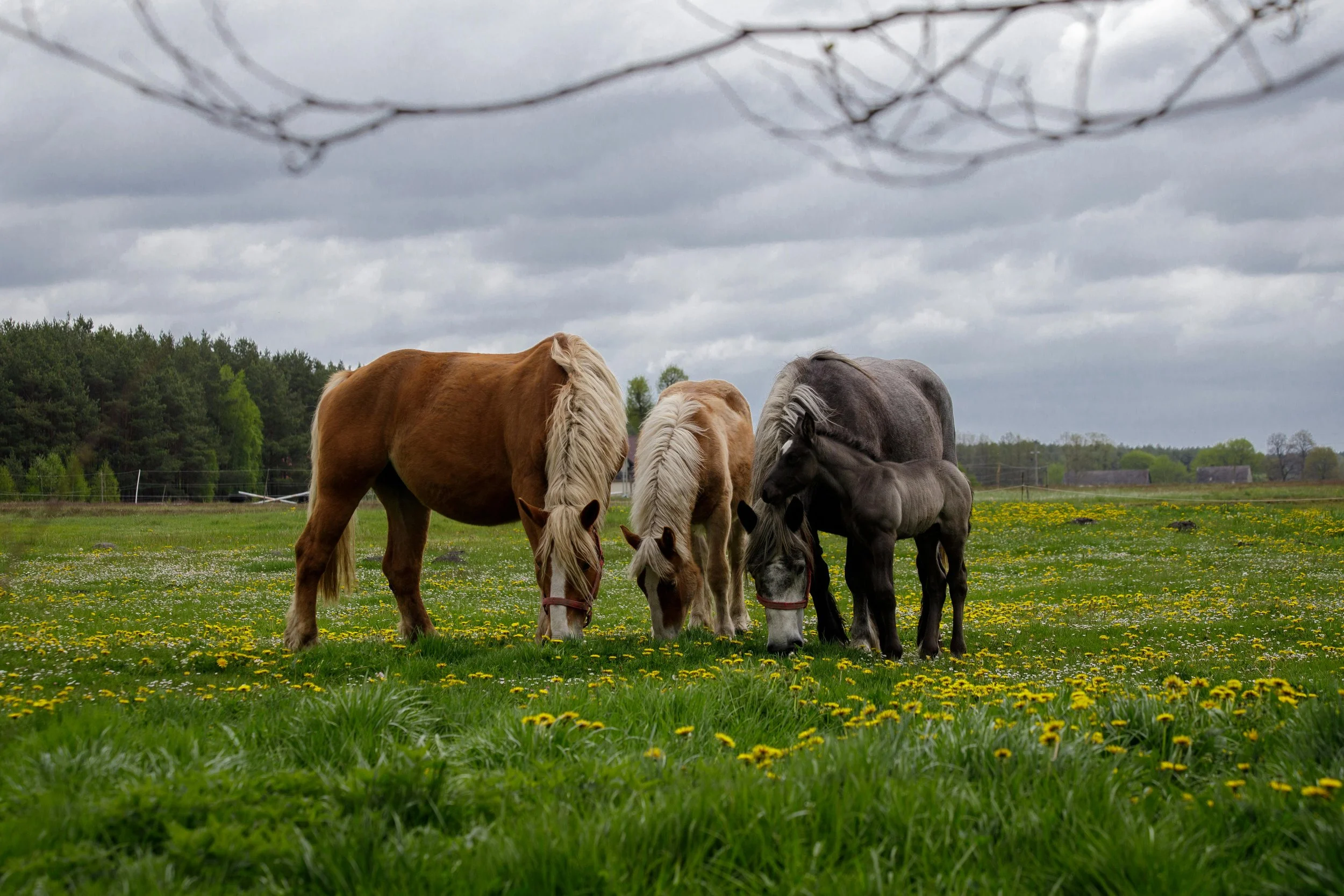
I am seeing a lot of posts at this time of year regarding horses with spring laminitis with some well meaning but somewhat disconnected advisements and theories. We are all doing our best, but sometimes do not know what we do not know. I would like to share some unconventional thoughts about this to promote a way of looking at this through the wisdom of Mother Nature’s lens. It may turn into a bit of a read, but I feel this needs saying.
I understand that we want to maximise pasture time as hay and feed prices are at all time highs, the winter has been harsh and there is a tempting flush of green on the fields, but are we really maximizing our resources and the health of our horses? Let’s address this from two points of view of both the horses and the grasses. Nature evolved as a complex, resilient and interconnected set of systems and we as modern humans have lost much of the connectivity in these systems as we rely on profit driven corporate agendas or no longer relevant historical wisdom.
The free living or “wild” horse is not what we mostly support in the modern world as a companion animal. Nature timed things beautifully as in the wild, when grasses are thick and rich, horses would be engaging in biologically expensive activities such as foaling, nursing, breeding, defending mares, fighting off competitors for premium ranges and mating opportunities, traveling large distances for new forage and much more. They would have come out of winter hungry and very lean as they scrambled for nourishment, having given their pancreas a rest and their body’s time to become less insulin resistant. They have survived the last few months on scarce, high fiber, low sugar, low nutrient feeds and they are ready for rich spring grass.
Our domestic horses rarely work like horses of old as they are no longer required for our survival, pulling plows, carriages, and much more for hours and hours a day. Most of our horses come out of winter with high insulin levels as they have been fed and pampered throughout the season. They are not adapted to the fresh grass like their free roaming or hard working ancestors were.
Now let’s look at it from the grasses perspective. It has been dormant all winter and has been surviving off of sugar root reserves, which are now vital to begin the new growth cycle. This is why we often see horses digging up roots in the spring….they are sweet and nutrient dense. As the plant comes out of dormancy, it has no solar panel with which to photosynthesize and harvest the suns energy. The leaf matter has either been grazed off the previous season or has died off. The plant now pushes the stored, simple carbohydrates, (sugars) above ground so that it can build new leaf material whereby it will harvest CO2 and the suns energy through photosynthesis.
This is called the vegetative stage and is the tempting green grass that we turn our horses out on to in spring and is high in sugars. As the plant begins to grow, some of the sugars are shared with microbes in the soil that that will trade these with the plant for nutrients such as minerals and water; another layer of symbiosis within this system. As the plant grows in early spring, it is depleting its root reserves and will not fully replenish them until it can grow leaves with which to produce new carbohydrates and reaches the elongation phase of its development. Now the plant puts down complex structural carbohydrates which we know as fiber growth (it needs these complex, structural fibers to grow stand up and grow tall). Horses are designed to eat high fiber diets as unlike ruminants as they are hindgut fermenters. They depend on large volumes of low sugar feeds and throughput; to not only prevent ulcers as they continually produce stomach acid, but also to keep things moving along. Unlike ruminants, who spend much more time on processing each mouthful and require more nutrients per bite, when times are tough, horses simply extend their grazing hours and eat more fiber. They have relationships with microbes in their hind gut that have the ability to break down this seemingly indigestible material and fuel the horse perfectly. This is yet another layer in the symbiotic web. The higher the fiber in the growth phase of the plant, the more the sugar is diluted, the faster your horses feel full which will in turn reduce or stop binging behaviors.
By turning horses out on sweet, early growth grass, they eat and eat like you would if you lived on low fiber, tasty pastries. As in human diets, insulin will constantly trigger the craving for more food. The animal does not have the assistance of fiber to feel full and pause eating. The poor plant is hit over and over by grazing as it is depleting its root reserves trying to build leaves to harness more solar power, stunting its forage growing potential. It eventually runs out and the plant dies or is severely debilitated.
Even with this said, waiting and turning out horses in the elongation phase of the plant life cycle (look for 2-3 leaves on the stem), should be done with care, prepping them with roughage before they go out and being mindful of the time of day. There are great design systems to help with pasture maximization and management. If you resist grazing the short new stuff now, you will not only have healthier horses with lower supplementing and veterinary costs, but will also allow the plant to grow and produce more forage for your stock, reducing your overall hay costs. I would call this a win-win strategy. Let’s work with nature and her epic ancient knowledge to rebuild functioning, healthy, interconnected and diverse systems for the wellbeing of ALL the participants.